
2027 Logistics Yard Management: Why OCR-Based Gate Automation Is Becoming Standard
- Posted On: October 14, 2026
- Post Comments: 0
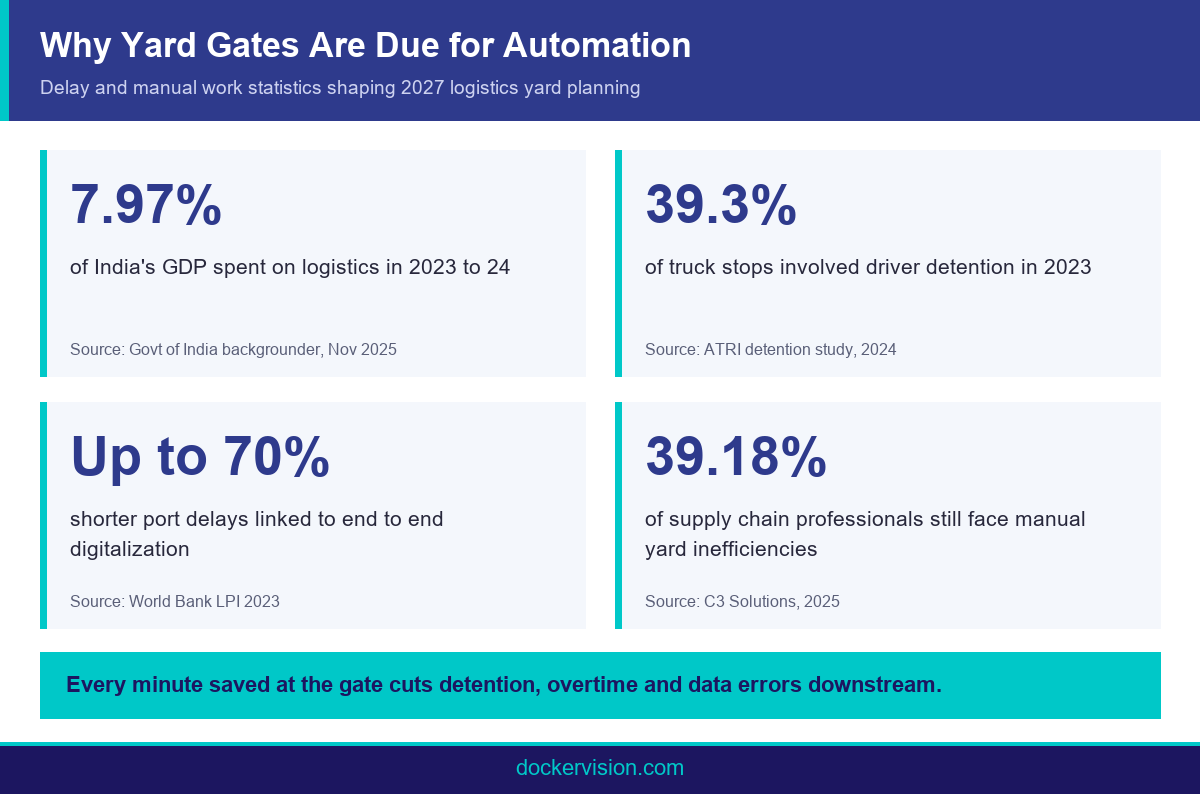
India spent an estimated 7.97 percent of GDP on logistics in 2023 to 24, according to a government backgrounder on India’s logistics costs. A large share of that cost is time, and much of it is lost at the yard gate. A gate OCR camera system reads container codes and vehicle plates as trucks arrive, so entries are logged without a clerk and a clipboard. If your yard still runs on manual checks, talk to the Docker Vision team about where automation fits. This article explains why OCR based gate automation is moving from optional to expected, and how to plan the upgrade for 2027.
Key Takeaways
- Manual gate checks create queues, detention costs and data errors, and the evidence shows those costs are large and measurable.
- A gate OCR camera system captures container numbers and number plates automatically, then passes clean data to the systems that run the yard.
- Policy, customer expectations and digital visibility platforms are pushing yards toward automated gates, so 2027 budgets should include a plan for one.
Why Manual Gates Became the Bottleneck in Logistics Yards
The gate is where every truck, container and document meets the yard for the first time. When that check is manual, every delay at the gate spreads into the yard, the dock and the road outside.
Research from the trucking sector shows how expensive waiting has become. The American Transportation Research Institute found that drivers were detained at 39.3 percent of all stops in 2023. The industry lost about 135 million hours and an estimated 11.5 billion dollars in productivity. The same study found that detained trucks drove 14.6 percent faster on average, which turns a queue at the gate into a road safety problem.
Global data points to the same pinch point. The World Bank Logistics Performance Index notes that the biggest delays occur at seaports, airports and multimodal facilities. A typical yard gate sits right inside that category. Clerks typing container numbers, checking seals and writing plate numbers by hand cannot keep pace when volumes rise.
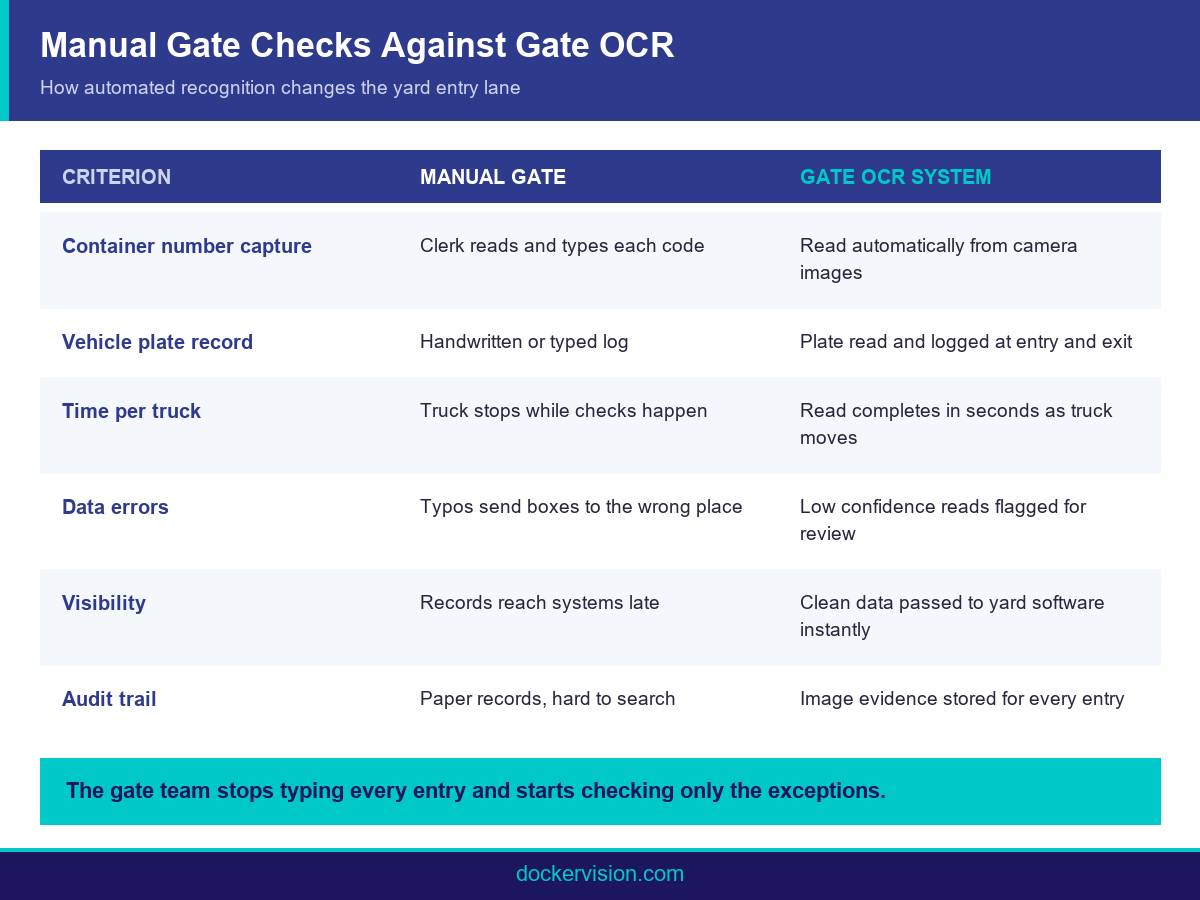
Manual entry also creates a data problem. A single mistyped character in a container code can send a box to the wrong row or leave it missing in the system for hours. Those errors rarely show up at the gate. They show up later, when a truck waits for a container nobody can find.
How a Gate OCR Camera System Works at a Yard Entry
A gate OCR camera system replaces manual reading with cameras and recognition software that work in seconds. The truck keeps moving, and the record is created as it passes.
The process is simple in practice. Cameras positioned at the entry lane capture the container faces and the front of the truck. Recognition software reads the container number, the ISO type code and the vehicle number plate. The system checks those details against expected arrivals, then opens the gate or flags an exception for a human to review.
Docker Vision builds this capability for container terminals. Its dOCR platform identifies containers, rail wagons and vehicles in real time, and the company reports more than 95 percent accuracy. It runs on premise, so images are processed within seconds on a local server rather than sent to the cloud. Many sites can reuse existing cameras, and our guide to standard IP cameras versus line scan portals explains why.
The same approach applies to inland container depots, container freight stations and large distribution yards. Anywhere trucks carry containers or need a verified plate record, automated recognition removes the slowest manual step. Number plate reading also builds a clean entry and exit log for every vehicle, which supports security audits and dispute resolution.
No recognition system reads every character perfectly in every condition. Rain, glare, dents and faded paint all affect image quality. A well designed gate OCR camera system plans for this by routing low confidence reads to a clerk, who confirms the record from a screen in seconds. The gate team shifts from typing every entry to checking only the exceptions, which is where the real labour saving comes from.
Why OCR Based Gate Automation Is Becoming Standard
Three forces are turning gate automation from a competitive advantage into a baseline expectation. Yards that wait until 2027 to start planning may find themselves behind their customers and partners.
The first force is digital visibility. India’s Logistics Data Bank 2.0 now gives real time visibility of millions of containers, and it syncs with the Unified Logistics Interface Platform. Shippers increasingly expect the same visibility inside the yard. A gate that still produces handwritten records breaks that chain at the exact point customers care about.
The second force is evidence that digital processes work. The World Bank reports that end to end supply chain digitalization can shorten port delays by up to 70 percent in emerging economies compared with developed ones. That finding gives operations leaders a clear case to present to finance teams.
The third force is the persistence of manual work. A C3 Solutions survey of 170 supply chain professionals found that 39.18 percent still face manual inefficiencies in yard and dock management. That leaves a large group of operators exposed when volumes spike. In India, where the same government backgrounder puts total logistics cost at about Rs 24.01 lakh crore for 2023 to 24, even small time savings at each gate add up to real money across a network of yards.
Together, these forces explain the outlook. Automated gates are on track to become the norm at busy yards, much as barcode scanning became standard in warehouses. The question for 2027 is timing, not whether.
Planning Your 2027 Gate Automation Upgrade
A successful gate project starts with clear requirements, not a camera catalogue. Use the planning months before 2027 to define outcomes, test the site and choose a partner who can prove results.
Start by mapping your gate traffic. Count lanes, peak hour arrivals and the mix of container trucks, empty chassis and general vehicles. Then list the data you need at entry, such as container number, ISO code, seal status and plate number. That list defines how many cameras each lane needs.
Next, audit what you already own. Existing CCTV can often serve recognition after repositioning, which keeps the project closer to a software budget. Then decide how gate data will reach your yard or terminal software. Our explainer on how gate data flows into terminal software covers the common integration patterns.
Agree on measurable performance before you sign. A written accuracy agreement sets the read rate, the test method and what happens when results fall short. Finally, build a simple payback model that links faster gates to fewer detention claims, lower overtime and better yard utilisation.
Many teams begin by searching for an OCR camera system supplier near me. Local presence matters for site surveys and support, but proof matters more. Ask every supplier for live accuracy figures, implementation timelines and references from comparable sites. Docker Vision, for example, states that its solution can go live in two days because the work is mainly software installation.
Consider a pilot before a full rollout. Equip one busy lane with a gate OCR camera system, run it alongside the manual process for a few weeks and compare read rates, queue times and data errors. A pilot gives your team real numbers from your own site, and it surfaces lighting or placement issues while they are still cheap to fix.
If you are also reviewing a vehicle number plate recognition camera for logistics 2027 projects, combine both reads in a single lane design. One integrated gate is easier to maintain than separate systems for containers and vehicles.
Conclusion
Yard gates have become one of the most expensive points of delay in logistics, and the data on detention, port delays and manual inefficiency makes that clear. A gate OCR camera system turns the slowest manual step into an automatic record that feeds the rest of the yard. As digital visibility spreads and customers expect real time updates, automated gates are fast becoming standard. Start planning now so your 2027 budget includes a tested, measurable upgrade. To review your gate lanes and camera estate, contact Docker Vision for a site assessment.

Leave A Comment